
Harvesting is one of the most important phases of farming, and doing it at the right time can have a great impact on the quality of the crop and the overall productivity of the farm. The traditional harvesting methods can be labour-intensive, time-consuming and involve multiple operations. Modern agricultural machinery has changed this process, enabling farmers to harvest larger areas more efficiently.
The machine that is developed for better movement and stability in field conditions where the conventional wheeled machines may have problems is the track harvester or track combine harvester. The undercarriage is tracked, which helps distribute the weight of the machine over a larger surface area. This is especially useful in soft, wet, muddy, or uneven fields.
The choice of the right harvesting machine for Indian farmers depends on the type of crop, soil condition, field size, harvesting season, and operating requirements. The benefits of a track harvester can help farmers determine if this type of machine is right for their farm.
Also Read: Agricultural Implements That Improve Farm Productivity and Reduce Costs
What’s a track harvester?
Combine harvesters can be wheeled or track-driven. A track harvester is a combine harvester that is track-driven. Like other combine harvesters, it combines several harvesting operations in one machine.
Depending on the design and configuration, a track combine harvester can perform several functions:
- Harvesting the standing crop
- Feeding of harvested material
- Threshing
- Sorting the grain from the straw
- Crop grain harvested cleaning
- Gathering grain
- Grain discharging
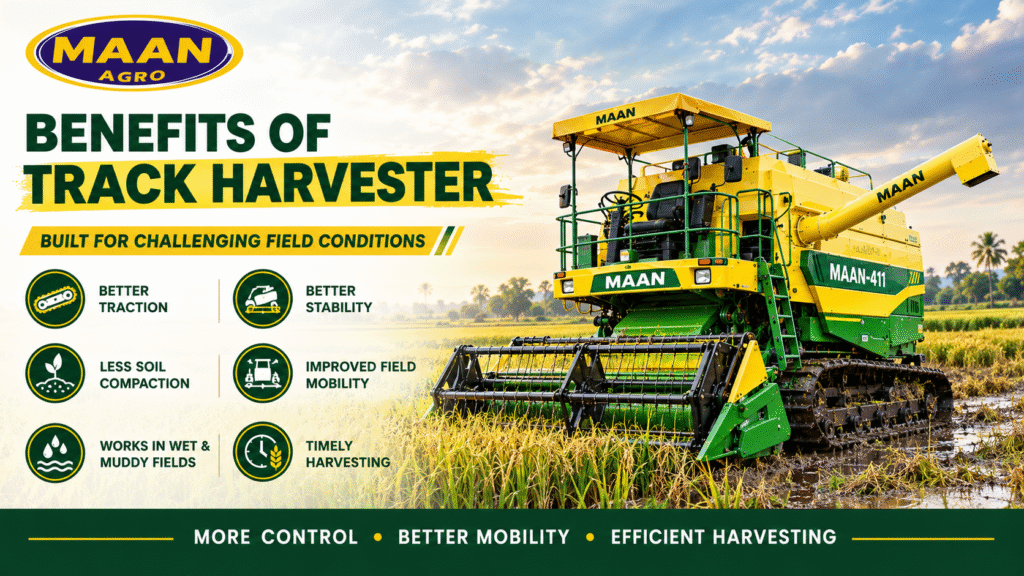
The main difference is the track-based mobility system. Tracks have a larger contact area with the ground, which can increase traction and lower pressure on the soil.
Advantages of a Track Harvester
1. Improved Performance in Wet and Soft Soil
One of the biggest benefits of a track harvester is soft ground.
The fields may become muddy after rain or irrigation, especially during paddy harvesting. Wheeled machines may suffer from wheel slip or not be able to move in such conditions.
A track system distributes the machine’s weight over a greater area. This can help the harvester to travel through softer soil with more stability.
2. Additional Traction
Tracks provide constant contact with the ground and can assist in improving traction when working in the field.
A better grip is particularly useful when harvesting under difficult conditions. This can reduce unnecessary wheel spin and allow the machine to keep a more consistent motion.
This can be a significant advantage to farmers who work in fields where soil conditions are constantly changing.
3. Lower Ground Pressure
Heavy agricultural machinery applies a lot of pressure on the soil. Too much ground pressure can also help to compact the soil, especially if the machines are running over the same field again and again.
Tracks can reduce the ground pressure compared to wheeled machines of the same weight because they spread the weight of the machine over a larger area of contact.
Lower ground pressure can be an advantage when working in softer agricultural fields.
4. Perfect for Paddy Harvesting
Harvesting paddy fields can be hard work as the soil can be very wet. Track harvesters can be especially useful in these environments, as their track system is designed for improved mobility on softer surfaces.
Actual performance, however, depends on machine design, field conditions, soil moisture, operator experience, and crop conditions.
5. Greater Stability on Uneven Ground
Agricultural fields are not always level. Uneven terrain, soft patches, crop residue, and changes in soil conditions can impact machine movement.
A track-type harvesting system can ensure stable contact with the ground, which assists the machine in maintaining better balance during field operations.
This may make track harvesters a practical option for farms with less homogeneous field conditions.
6. Quicker Harvesting
Like other modern combine harvesters, a track harvester can combine multiple harvesting processes into one operation.
The harvesting operation of the machine is done in one operation rather than cutting, threshing, and cleaning as separate processes.
This can greatly reduce the time needed to complete the harvest, especially on larger farms.
7. Less Reliance on Manual Labour
Availability of labour can be a major challenge during peak harvesting seasons. Farmers may require lots of hands to finish the harvest in a short time.
A track combine harvester can reduce the amount of human labour needed for harvesting operations. That means farmers can cover more land with fewer workers and have a more organised harvest schedule.
8. Efficient Handling of Crops
A combine is built to take harvested crop material and process it through a number of stages. The machine combines cutting, feeding, threshing, separation, and cleaning.
It reduces the need for separate harvesting equipment and can make the whole farm workflow more efficient.
9. Good for Large-Scale Farming
Track harvesters can be particularly useful for farmers, contractors and agricultural operators working on larger areas.
When you’re harvesting hundreds of acres or working across multiple farms, speed can often be critical to getting the work done. Choosing the right combine harvester can improve machine utilisation and help operators complete the harvest within the desired window.
10. Helps You Harvest In Tough Conditions
Weather can have a big impact on harvest times. Rain can weaken fields and make conditions difficult for operations.
A track harvester might have an advantage in certain wet-field situations because its tracks are built to distribute weight and provide better traction.
Too much traffic can damage the structure of the soil, so farmers should still avoid using heavy machinery when it is not suitable for field conditions.
Wheeled Harvester and Tracked Harvester
Track and wheeled harvesters have their own advantages. The right choice depends on the farm and the environment of operation.
| Factor | Track Harvester | Wheeled Harvester |
| Soft soil | Generally better suited | May face more traction challenges |
| Wet fields | Useful in suitable conditions | Can experience wheel slip |
| Ground pressure | Distributed over tracks | Concentrated through tyres |
| Traction | Strong continuous contact | Depends on tyre and soil conditions |
| Road movement | Depends on track design | Generally convenient |
| Uneven field conditions | Good stability potential | Depends on terrain |
| Maintenance | The track system requires inspection. | Tyres and wheel components require maintenance. |
| Best use | Challenging and softer fields | Suitable fields and road-friendly operations |
The comparison is general. Actual performance varies by model and operating condition.
Key Features to Look for When Buying a Track Harvester
The purchase of a combine is a major investment. Farmers should be looking at the whole machine, not just the track.
Horse Power
Engine power must be matched to the harvesting capacity and crop conditions. Before buying, check the manufacturer’s recommended engine specs.
Track Layout
Track system: It should be suitable for the soil and field conditions in which the machine will be used. Ask about track width, durability, need for replacement, and maintenance.
Harvesting Capabilities
Consider the amount of land you need to harvest in the season. If you have a machine with the right harvesting capacity, you can avoid delays.
Crop Compatibility
Choose the right machine for the crops you grow. Different crops may require different settings/configurations.
Grain Cleaning System
It is important to maintain the quality of harvested grain through good grain separation and cleaning. Check the machine’s threshing and cleaning system before you buy.
Fuel economy
Fuel is one of the major running expenses of farm machinery. Compare estimated fuel consumption and operating costs.
Spare Parts & Maintenance
The combine harvester works under tough conditions in the field. Easy access to service support and spare parts can reduce downtime.
Operator Comfort
Harvesting operations may take many hours. Factors such as visibility, controls, seating, steering, and operator ergonomics can influence productivity and comfort.
Tips for Maintaining a Track Harvester
Proper maintenance can help extend the life of a track combine harvester and avoid expensive breakdowns.
Check the Tracks Regularly
Look for abnormal wear, damage, cracks, and other abnormalities in the tracks. Follow the inspection and adjustment procedures recommended by the manufacturer.
Clean the Machine
Different machine parts can accumulate straw, crop residue, dust, and mud. Cleaning the harvester after use can make inspections easier and reduce the risk of problems related to residue.
Hydraulic Systems & Check Engine
Regularly check engine oil, hydraulic fluid, filters, hoses, and other critical components in accordance with the manufacturer’s service schedule.
Check belts and chains.
Check belts, chains, bearings, and other moving parts regularly for wear and correct tension.
Service Before Harvest Season
It is better to identify potential problems before the start of the harvesting season. A pre-season inspection can reduce the likelihood of unexpected downtime during busy operations.
Are Track Harvesters Worth the Investment?
If you are a farmer working in soft, wet, muddy, or other difficult field conditions, a track harvester can offer real operational benefits. It has better ground contact, traction and lower ground pressure, which makes it suitable for some agricultural environments.
“But a track harvester purchase should be based on actual farm needs. Farmers should assess annual acreage, crop types, soil conditions, machine utilisation, fuel expenses, maintenance costs and local service availability.
A wheeled combine harvester may also be practical if most of the harvesting is done on firm, relatively dry soil. The best machine is the one that best fits the operating conditions and workload of the farm.
Why Maan Agro for Agricultural Machinery?
Maan Agro provides agricultural machinery solutions to farmers who want to improve the efficiency of their farming operations. Its range includes combine harvesters and other agricultural machinery for various needs of the fields.
If you are a farmer considering a tractor harvester, you should discuss the actual field conditions, crops, acreage, and harvesting requirements with the supplier before deciding.
Maan Agro can help buyers to find the available agricultural machinery and its specifications for their farming needs. Before buying, farmers should check the latest model specifications, availability, pricing, warranty, and after-sales support.
Also Read: Combine Harvester for Sale: What to Check Before Buying
Final Thoughts
The benefits of a track harvester are especially evident when the farm conditions are soft, wet, muddy, or uneven fields. The track design offers improved traction, better weight distribution of the machine, and lower ground pressure.
Besides mobility, the common advantages of modern harvesting machinery, such as fast harvesting, reduced dependence on labour, integrated threshing and cleaning, and higher operational efficiency, are gained from a track combine harvester.
Indian farmers should select the right harvesting machine based on crop type, field conditions, farm size, budget, and expected workload. Farmers can compare these factors carefully and make a practical machinery investment that is cost-effective.
In terms of combine harvesters and other agricultural machinery for modern-day farming, Maan Agro is worth a look.
FAQs
1. What is a track harvester?
Ans: A track harvester is a form of combine harvester that rolls on continuous tracks rather than conventional wheels. The track system offers a larger surface area in contact with the ground and can improve mobility and traction in suitable field conditions.
2. What are the main advantages of a track combine harvester?
Ans: The main advantages are increased traction, reduced ground pressure, improved stability, and improved suitability for soft or wet fields. It can also give the general harvesting advantages of a modern combine harvester.
3. Can a track harvester be used in paddy fields?
Ans: These fields may have soft or wet soil, making track harvesters well suited for these paddy fields. But suitability is dependent on the specific machine, soil conditions, crop condition, and manufacturer recommendations.
4. How do I service a track harvester?
Ans: Check tracks, engine, hydraulic system, belts, chains, bearings, and harvesting components regularly. Maintain the machine clean and adhere to the manufacturer’s suggested service schedule.
5. Buy a track or wheeled combine harvester?
Ans: It is contingent upon the conditions of your field. If the field is soft and wet, a track harvester might be a good choice. If the field is firmer or you need to move around more on the road, a wheeled harvester might be better. Before you buy, compare the machine with your real needs on the farm.